Sattelberg: A VC for Australia’s toughest soldier
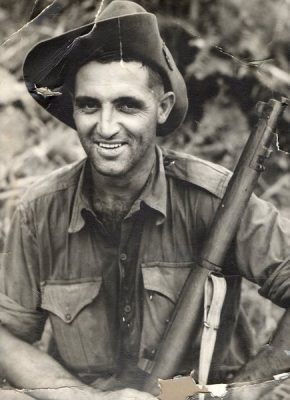
One of Australia’s true war heroes was a poet and butterfly collector.
The annals of Australian military history are chock full of tales of heroism and derring-do and every so often a new hero arises from these vast volumes. Words: Roderick Eime
Thomas Currie ‘Diver’ Derrick was one such soldier who rose to ‘rock star’ status among the Australian Imperial Force (AIF) in WWII but has since faded from our memories.
Australian migration of the Goldrush era (1851-60)
Europe in the mid 19th century was shambles. If it wasn’t famine and disease, it was unemployment and insurrection sweeping across France, Germany, Italy and even parts of Britain.
America too was effected, the throngs of immigrant refugees upsetting the delicate political balance in the lead-up to the catastrophic civil war that would forever divide the nation.
Did an Australian adventurer and spy forewarn of the attack on Pearl Harbor?
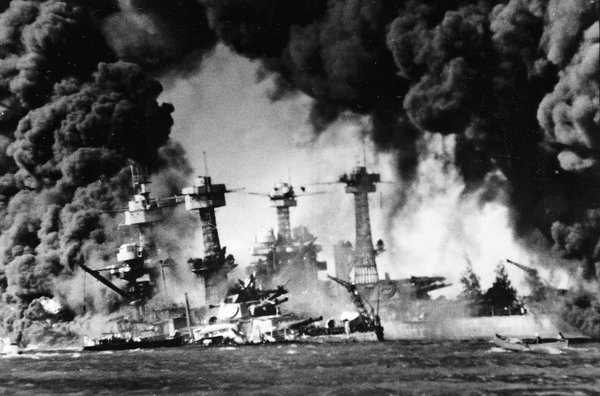
Battleship USS West Virginia sunk and burning at Pearl Harbor on Dec. 7, 1941. In background is the battleship USS Tennessee.
by Roderick Eime
The story begins aboard the 1929 round-the-world flight of the German airship, LZ-127 Graf Zeppelin.
A truly international contingent of media and privileged guests are enjoying the lavish facilities of Germany’s luxury airship as they complete their ground-breaking three week journey around the planet.
Amelia Earhart Mystery: the theory that just won’t go away
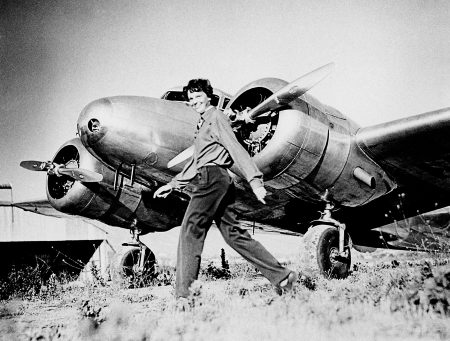
Amelia Earhart, who served as a consultant in the Department of the Study of Careers for Women at Purdue from 1935 to 1937, strides past her Lockheed Electra. Purdue Libraries' Earhart collection. (File photo)
The Amelia Earhart mystery has gripped the imagination for almost 80 years and despite numerous searches and millions of dollars, no conclusive evidence has yet been found.
Many theories have been put forward over the years and just as many discounted, but one just keeps coming back. The idea that Earhart was forced down and captured by the Japanese in the Marshall Islands is as unpalatable as it is incredulous. But one researcher, Mike Campbell, makes a compelling case for this proposition.
Historic aircraft wreck found. Is this the Wildcat of US ace, James E Swett?
On my last trip to the Solomon Islands in October, I was fortunate to make my first dive on some of the historic aircraft wrecks that litter the harbour near Tulagi in the Florida Islands.
I was introduced to Bob Norton, a Kiwi ex-serviceman and the new proprietor of the Raiders Hotel in Tulagi, a quaint and peaceful waterfront hotel in the little former British pre-war colonial capital in the Florida Islands, across Iron Bottom Sound from Honiara.
Guadalcanal War Mystery Solved. Pilot’s remains recovered.
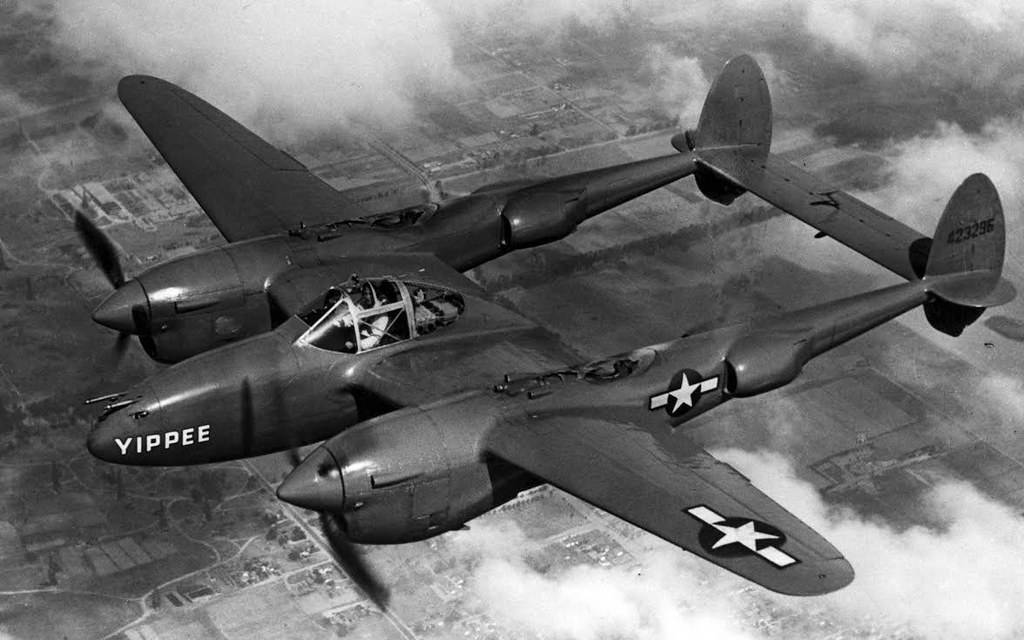
P-38 Lightning of the type flown by Maj. Peyton Mathis
The Solomons continue to throw up mysteries from the turbulent years of WWII.
One mystery solved recently has been with the rediscovery of a P-38 Lightning fighter that crashed on 5 June 1944 while on approach to what was then known as ‘Fighter 2’ (Kukum Field). This airstrip is now the golf course near historic Henderson Field, the main airport from which Solomon Airlines operates.
The True Story behind JFK’s PT-109
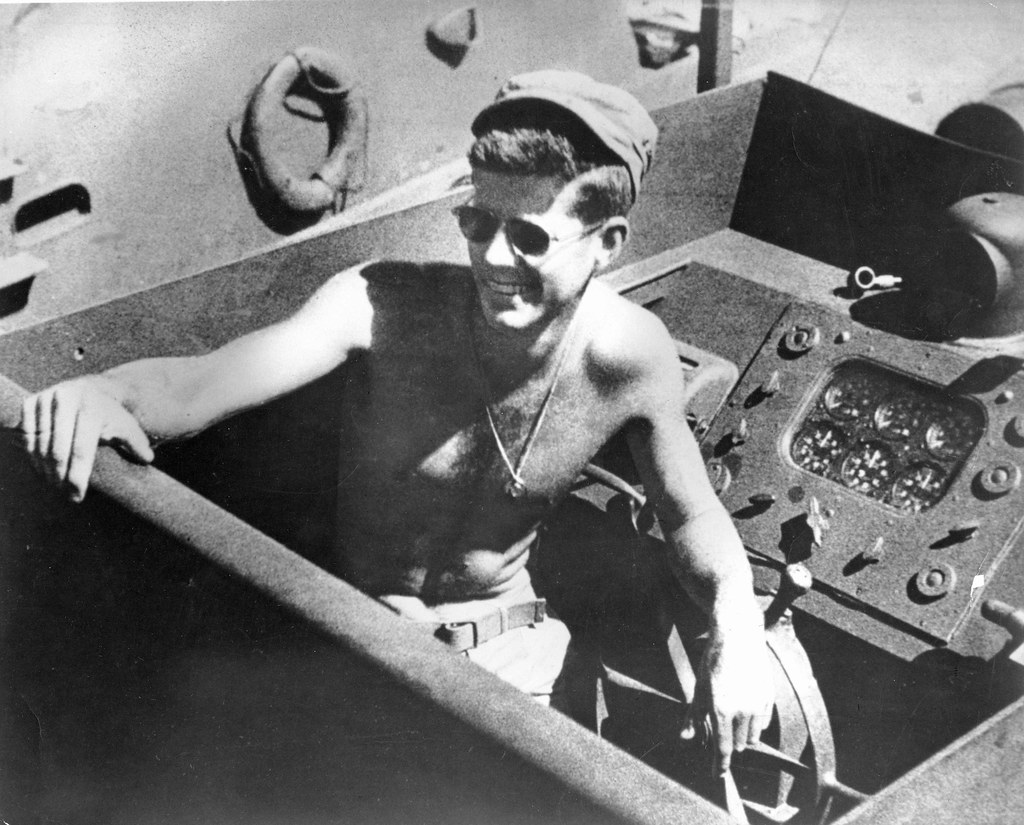
Former U.S. President and then U.S. Navy Lt. John F. Kennedy is seen aboard the Patrol Torpedo boat PT-109 boat during World War II in the Pacific theatre, in this handout photograph taken on March 4, 1942. (REUTERS/John F. Kennedy Presidential Library/Handout)
David Ellis and Roderick Eime
Only the more adventurous travellers make it to remote Gizo in the Western Province of the Solomon Islands. It's a magical place with some of the world's best fishing as well as wreck and reef diving.
From Gizo you can venture a further 10 kilometres to a minuscule dot shown on most charts as either Kasolo Atoll or Plum Pudding Island. This sandy speck is better known in popular mythology as Kennedy Island – the place where a then 26 year old US Navy Lieutenant John F. Kennedy, commander of the motor torpedo boat PT109 and future President of the United States, together with ten of his crew, waded ashore in pitch-blackness after their boat was rammed and sunk by the Japanese destroyer Amagiri on the night of 2 August 1943.
Lifting the Shame of Savo Island
Heroes of the Solomons: Captain Frank Getting RAN
One of Australia’s most experienced and capable naval commanders was struck down in his prime during one of the most ferocious naval engagements of WWII. Was he later a cruel victim of a historical cover-up? Roderick Eime investigates.
The US involvement in the many battles of the Solomon Islands campaign are well documented through movies, documentaries and books. Yet, the substantial participation of Australian naval forces in that campaign is far less acknowledged.
When the Allied Forces began their landings on Guadalcanal and Tulagi on 7 August 1942, they were supported by a massive combined naval force which included the Royal Australian Navy (RAN) warships Canberra, Hobart and Australia.
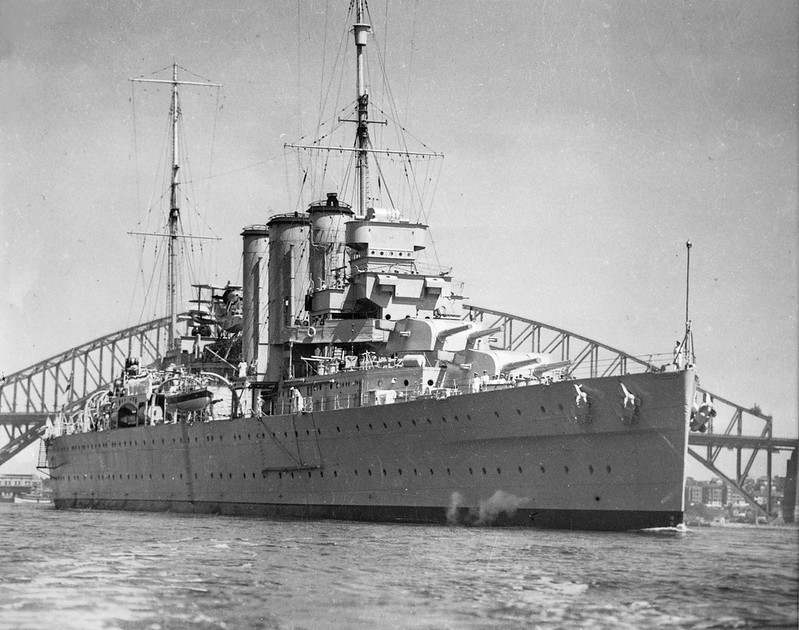
HMAS Canberra proudly in Sydney Harbour pre-war
HMAS Canberra was a British-built County class heavy cruiser of the Kent sub-class commissioned in 1928. At 10,000 tons and 180m in length, she was slightly larger than the more famous HMAS Sydney which had already been lost during her mutually destructive engagement with the German auxiliary cruiser Kormoran on 19 November 1941. Sydney’s sister ship, the light cruiser, HMAS Perth was lost in the Battle of Sunda Strait in March 1942.
Keeping Secrets – Beyond the Ramparts of the Unknown
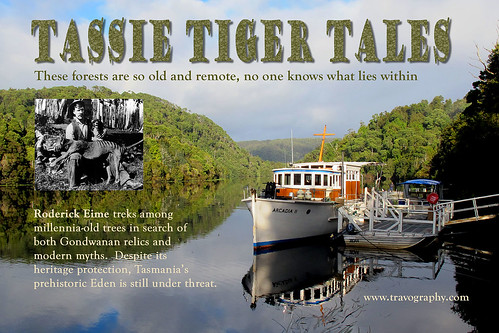
In one of the most remote corners of the planet, home to the purest water and cleanest air, live ancient plants and animals most of us will never see. But that shouldn’t stop us trying. Roderick Eime, ventures to northwest Tasmania in search of prehistoric mysteries.
Doing the Ho Chi Minh Trail of Saigon
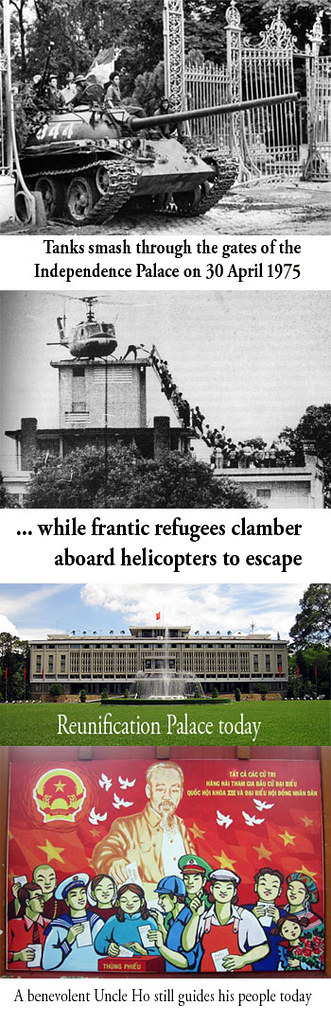
Spurred on by an old scrapbook clipping, Roderick Eime finds himself staring history in the face.
I turn fifty this year and I‘m betting the retiring baby-boomers who were my school teachers, bullying big brothers and pop idols wouldn’t score too well on a Ho Chi Minh quick quiz.
Even at 14, I was following the conflict in Vietnam very closely and when the newspapers trumpeted the fall of Saigon on 30 April 1975, I cut out the page and stuck it in my scrap book. If you do remember the front page images, one of two will invariably come to mind. One, the losers’, shows a Bell Huey helicopter loading frantic refugees while precariously perched on a rooftop. The other, the winners’, shows heroic tank 390 smashing down the gate of the Independence Palace, signalling the official capitulation of the city.
Except for our now geriatric fathers and long-gone grandfathers who may have witnessed similar events in the World Wars of the 20th century, such a sight is unimaginable for most of us today. Remember too that North Vietnam had been plugging away against fierce opposition for over 30 years to reach that point. No wonder it was a big day.
"And Ho Chi Minh?" I hear you ask, was the well-educated and worldly leader of the Vietnamese people, taking them from the days of cruel Japanese occupation during WWII, right through (almost) to the final victory. ‘Uncle Hồ’ died in 1969 from heart failure in Hanoi, but you can still visit him there in his mausoleum.
It wasn’t until 1995 that the US normalised relations with the one-party rule Socialist Republic of Vietnam and now the locals even feel compelled to gently remind visitors that their two countries were once at war. Vietnam, ever forward-looking and pragmatic, now welcomes French, US and Australian tourists like long lost cousins.
If you have a yearning for history there are a few key sites to check out in Saigon.
The Reunification Hall, formerly the Independence Palace, is now preserved in a permanent 1975 time warp, displaying trinkets, trophies and paraphernalia of the Big Day. Replica tanks sit on the lawn while inside, the map rooms, radio rooms and diplomatic chambers are all (more or less) the way they were on that day.
The Ho Chi Minh Campaign Museum is housed inside the former palace of the Cochinchina Governor on Ly Tu Trong Street. You won’t miss it because the yard is full of military vehicles and a whopping SAM missile. Pay your 50c and go inside to see dioramas, documents, maps flags and relics of those final days. Signs say ‘No Photos’ but I regularly ignore these. Just don’t make a spectacle of yourself.
The War Remnants Museum is the big daddy with all the hardcore material including weapons, aircraft, vehicles and photography of the entire conflict from all perspectives. In case you were left with any doubt after your visit, the Vietnamese won the war and, in that time-honoured tradition, they get to write their history. It’s confronting and at times disturbing, but enlightening all the same.
For me as a cowardly voyeur of human conflict, it was nevertheless a significant moment to stand at the gates where the tanks had once crashed through and share a little belated victory.
Want to know more? See Lonely Planet’s Saigon Guide || Helen Wong has Ho Chi Minh City tours